
Sanibel Lawn Edging Services
Choose our lawn edging services for precise, durable borders that elevate your curb appeal and make lawn maintenance effortless year-round.
Get a Free QuoteOur Sanibel Landscaping & Yard Care Services
When to Schedule Lawn Edging in Sanibel, Florida – Seasonal Guide
In Sanibel, Florida, the best times to schedule lawn edging are closely tied to our unique subtropical climate and the island’s lush landscape. With mild winters and hot, humid summers, most homeowners in neighborhoods like The Dunes or near the Sanibel Lighthouse find that early spring and late fall are optimal for edging. These periods avoid the peak summer heat and heavy rainfall, allowing for cleaner lines and healthier turf recovery.
Local environmental factors play a significant role in determining the right timing. For example, Sanibel’s sandy soils drain quickly but can dry out during drought-prone months, while shaded areas under mature palms or oaks—common in Gulf Pines and Beachview Country Club Estates—may require more frequent attention due to slower grass growth. It’s also important to consider municipal guidelines and seasonal events, which you can review on the official city website, to ensure your lawn care aligns with local regulations.
Local Factors to Consider for Lawn Edging in Sanibel
- Tree density and shade coverage, especially in established neighborhoods
- Soil type and drainage, with sandy soils requiring different care than clay
- Seasonal precipitation patterns and risk of drought
- Proximity to saltwater and potential for salt spray
- Municipal restrictions or community association guidelines
- Terrain variations, such as elevation changes near Periwinkle Way
Benefits of Lawn Edging in Sanibel

Enhanced Curb Appeal
Weed Growth Prevention
Defined Landscape Borders
Reduced Lawn Maintenance
Improved Drainage Control
Long-Lasting Results
Sanibel Lawn Edging Types

Brick Lawn Edging
Brick edging offers a classic look and durable boundary for your landscape.
-
Metal Lawn Edging
Metal edging provides a sleek, modern border that resists weather and wear.
-
Plastic Lawn Edging
Plastic edging is a cost-effective and flexible solution for defining garden beds.
-
Stone Lawn Edging
Stone edging adds a natural, elegant touch to any landscaping design.
-
Concrete Lawn Edging
Concrete edging delivers a sturdy and long-lasting border for your lawn.
-
Wood Lawn Edging
Wood edging brings a rustic charm and blends seamlessly with outdoor spaces.
-
Rubber Lawn Edging
Rubber edging is eco-friendly and provides a safe, flexible border for gardens.
Our Lawn Edging Process
Site Evaluation
Marking Edges
Cutting Borders
Debris Removal
Final Inspection
Why Choose Sanibel Landscape Services
-
Sanibel Homeowners Trust Us
-
Expert Lawn Maintenance
-
Reliable Irrigation Solutions
-
Competitive Pricing
-
Professional Team
-
Sustainable Landscaping Practices
-
Personalized Service
Coordinating Lawn Edging Services with Sanibel's Municipal Stormwater Programs
Lawn edging on Sanibel requires careful attention to the island's stormwater infrastructure and environmental sensitivity. Because Sanibel is a barrier island with an interconnected system of swales, drainage channels, and wildlife corridors, edging debris—soil clippings, turf fragments, and displaced organic matter—must be managed to prevent material from entering drainage inlets or adjacent conservation areas. Property owners and managers should coordinate with the City of Sanibel's stormwater and public works departments before performing edging along rights-of-way, swale margins, or areas adjacent to preserved wetlands. Vegetative debris generated during edging should be collected on-site and disposed of through the city's approved yard waste procedures; verify current collection schedules and bundling requirements directly with Public Works.
- Collect all edging debris immediately rather than allowing it to wash into swales or storm drains
- Confirm right-of-way boundaries before edging along roadside turf areas
- Coordinate with stormwater management when edging near drainage structures or retention areas
City of Sanibel Public Works
Official Website: City of Sanibel Public Works
City of Sanibel Stormwater Management
Official Website: City of Sanibel Stormwater Management
How Sanibel's Coastal Sandy Soils and Humidity Shape Lawn Edging Results
Sanibel falls within USDA Hardiness Zone 10b and is classified as a Gulf Coast Florida barrier island with tropical-subtropical conditions. The island's soils are predominantly sandy and shell-influenced, with rapid drainage and low organic content. These conditions directly affect lawn edging outcomes. Sandy soils shift and erode more readily than inland clay or loam, meaning edging cuts along walkways, driveways, and bed borders lose definition faster—particularly during the wet season from June through October, when Sanibel receives the majority of its approximately 55 inches of annual rainfall. Salt exposure from coastal winds can stress turf margins, making edge zones more vulnerable to dieback. The high water table across much of the island also means that edging near low-lying areas may encounter saturated soil, complicating clean cuts and increasing the risk of root-zone disturbance in St. Augustinegrass, the predominant turf species on the island.
- Sandy, shell-based soils lose edging definition quickly after heavy rain events
- Salt spray along coastal-facing lots accelerates turf stress at exposed edge lines
- High water table conditions in low areas may require adjusted edging depth to avoid root damage
- Humidity and summer heat promote rapid stoloniferous regrowth of St. Augustinegrass across hardscape borders
Information on Sanibel's soil characteristics can be reviewed through the USDA Web Soil Survey, and regional turf guidance is available from UF/IFAS Gardening Solutions - Lawn Maintenance and Care.
Navigating Sanibel's Environmental and Stormwater Regulations for Lawn Edging
Sanibel's land development code and environmental protections are among the most stringent in Florida, reflecting the island's commitment to habitat conservation. While routine lawn edging does not typically require a permit, edging work adjacent to preserved wetlands, mangrove buffers, or designated conservation zones may trigger review by the City of Sanibel Natural Resources Department. Displaced soil, turf clippings, and sediment must not be discharged into any stormwater conveyance, canal, or water body, consistent with the Florida DEP NPDES Stormwater Program and the Clean Water Act. If chemical edging products or herbicide-based border treatments are used, applicators must hold valid credentials through the FDACS Pesticide Applicator Certification and Licensing program.
- Edging near conservation buffers or wetland setbacks may require coordination with Natural Resources
- All displaced material must be kept out of swales, drainage inlets, and waterways
- Chemical border treatments require proper FDACS licensing
City of Sanibel Natural Resources
Official Website: City of Sanibel Natural Resources
Timing and Methods for Lawn Edging in Sanibel's Tropical Growing Season
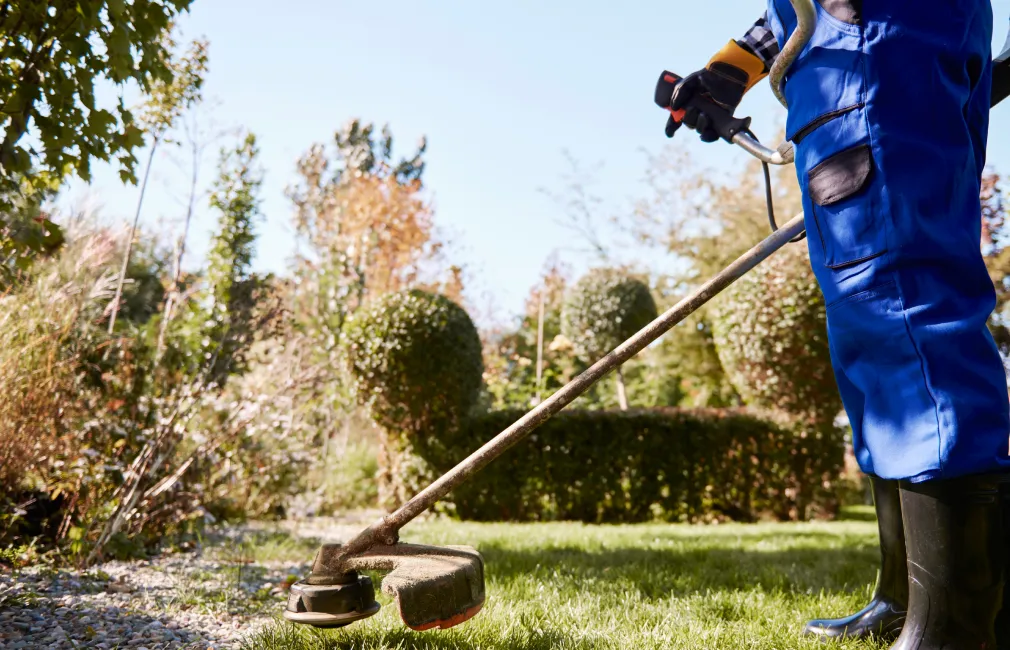
Sanibel's extended warm season means St. Augustinegrass and other warm-season turf species produce aggressive lateral growth from April through October, requiring more frequent edging during this period. Edging frequency typically increases to every one to two weeks during peak summer growth, while dry-season intervals from November through March may extend to three or four weeks. Mechanical string trimmers and steel blade edgers are the most common tools; blade edgers produce cleaner vertical cuts along hardscape borders, while string trimmers are better suited for softer bed-to-turf transitions. Edging depth along sidewalks and driveways generally ranges from two to three inches, sufficient to define the border without severing the shallow root system of St. Augustinegrass. All edging should be performed when turf is dry to reduce clumping and ensure clean debris collection. According to UF/IFAS Gardening Solutions, maintaining defined turf borders reduces stoloniferous encroachment into beds and hardscape joints.
- Edge every one to two weeks during the wet season (June–October) when growth peaks
- Use blade edgers for clean vertical cuts along concrete and paver borders
- Maintain edging depth of approximately two to three inches to protect shallow St. Augustinegrass roots
- Perform edging when turf is dry to ensure clean cuts and easier debris collection
- Collect all clippings and soil fragments immediately to prevent stormwater contamination
What Neighborhoods Do We Serve Throughout Sanibel, FL?
- The Dunes — This golf-course community features irrigated turf borders along cart paths and common areas, requiring consistent edging to maintain defined transitions between turf and landscape beds.
- Sanibel Highlands — Interior lots with mature native vegetation and sandy soils benefit from regular edging to prevent turf encroachment into adjacent natural areas and shell driveways.
- Gulf Pines — Heavily canopied lots with shade-tolerant turf require adjusted edging schedules, as reduced sunlight slows lateral growth but increases moisture retention along borders.
- Tahitian Gardens Area — Mixed residential and commercial frontage along Periwinkle Way demands precise edging for sidewalk and parking-area borders visible to pedestrian traffic.
- Shell Harbor — Canal-adjacent properties in this waterfront subdivision require careful debris management during edging to prevent soil and clippings from entering canal banks and drainage structures.
- Beachview Estates — Properties near the golf course and interior roadways feature well-maintained turf borders that require frequent edging during the wet season to control St. Augustinegrass runners.